

Private vs. Group Swim Lessons: Which Is Right for Your Child?
By Summit Aquatics Team|Published September 22, 2026|2 min read
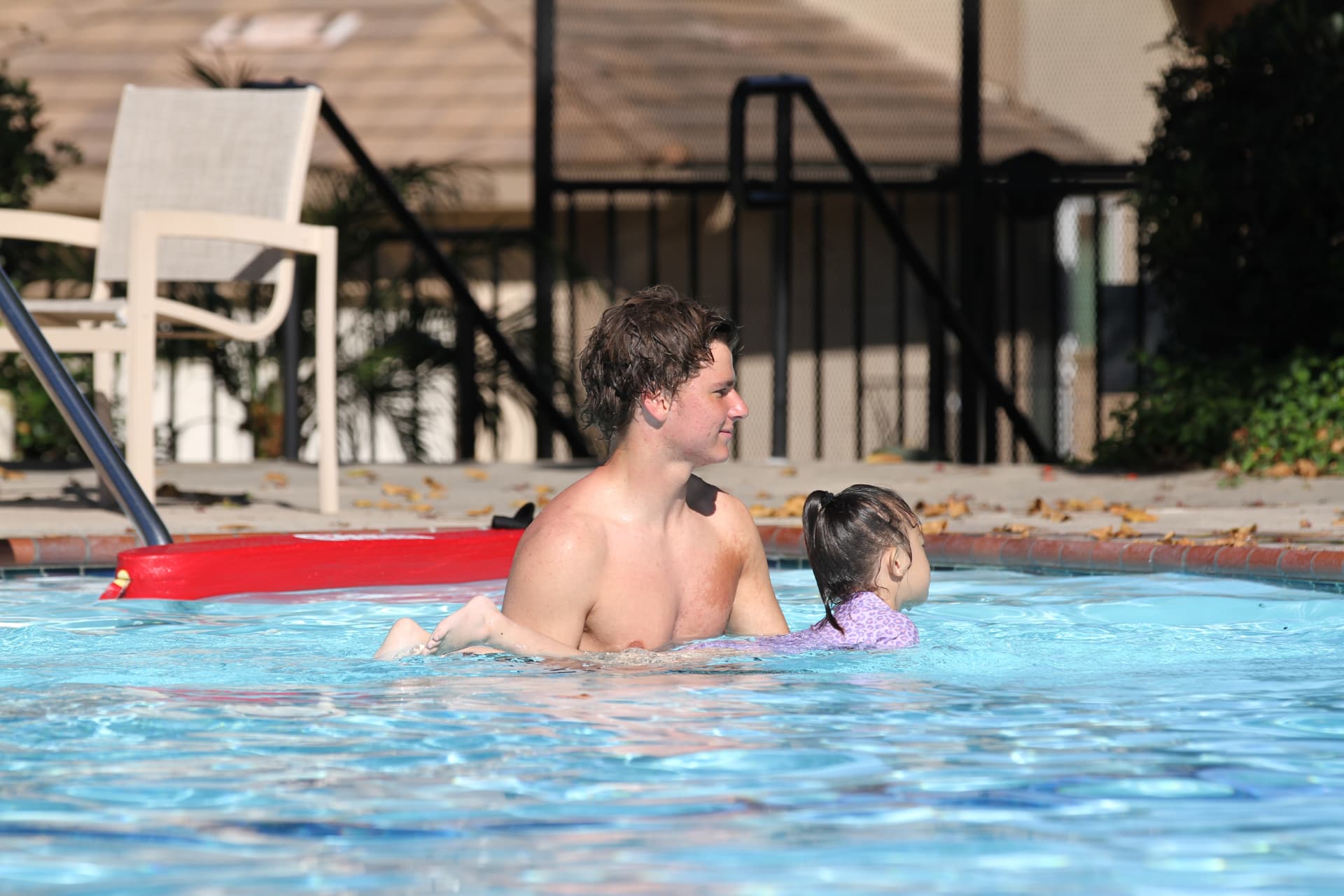
Both private and group swim lessons can help children develop swimming skills.
The better choice depends on your child, your goals, your schedule, and the learning environment in which your swimmer performs best. Here are the main differences families should consider.
Individual Attention
Private lessons
The instructor can focus the entire lesson on one swimmer or a small sibling group. If a child needs more work on floating, the lesson can spend more time floating. If the swimmer quickly masters a skill, the instructor can move forward.
Group lessons
An instructor must divide attention among multiple swimmers and often follow a class-wide progression. For children who enjoy learning with peers, this can still be an enjoyable environment.
Lesson Personalization
Private instruction makes it easier to adapt:
- Lesson pace
- Skill progression
- Communication style
- Repetition
- Challenges
- Breaks
- Goals
This can be useful for nervous swimmers, beginners, advanced swimmers, and children who benefit from individualized instruction.
Convenience
With at-home private lessons, the instructor comes to the family's home or approved pool.
That can eliminate:
- Driving to a swim school
- Waiting during group rotations
- Getting multiple children changed at a facility
- Working around a fixed class schedule
For busy San Diego families, convenience is one of the major reasons to consider mobile private instruction.
Social Environment
Group instruction provides more interaction with other children. Some swimmers enjoy that. Others become distracted or compare themselves with the rest of the class.
Private lessons create a quieter learning environment centered around the individual swimmer. Neither environment is automatically right for every child.
Progress
Private lessons can devote more instructional time directly to one swimmer, but no reputable swim program should promise that every child will learn within a fixed number of lessons.
Progress depends on age, starting ability, comfort, consistency, practice, development, and individual learning differences. We cover that in more detail in how many swim lessons a child needs.
What About Siblings?
Families do not necessarily need to choose between a large group lesson and completely separate private lessons.
Small sibling lessons can sometimes provide a middle ground. For compatible swimmers, Summit can offer shared instruction while still keeping the learning environment highly personalized.
Which Should You Choose?
Private lessons may make sense if you prioritize:
- Individual attention
- Convenience
- Personalized pacing
- Flexible scheduling
- Working through water anxiety
- Specific skill development
Group lessons may make sense if you prioritize:
- Group interaction
- A class environment
- Learning alongside peers
The best program is the one that helps your swimmer learn consistently and safely.
Related articles
How Many Swim Lessons Does a Child Need to Learn to Swim?
There is no responsible universal number. Here is how instructors actually think about progress, milestones, and consistency.
Swim LessonsDo You Need Your Own Pool for Private Swim Lessons?
A backyard pool is not always required. Here are the pools San Diego families commonly use for mobile private lessons.